When Do Babies Start Talking? Baby Talking Milestone and Tips
Babies usually start talking near 12 months, and you can support this milestone through reading books aloud, singing, and responding to their sounds.

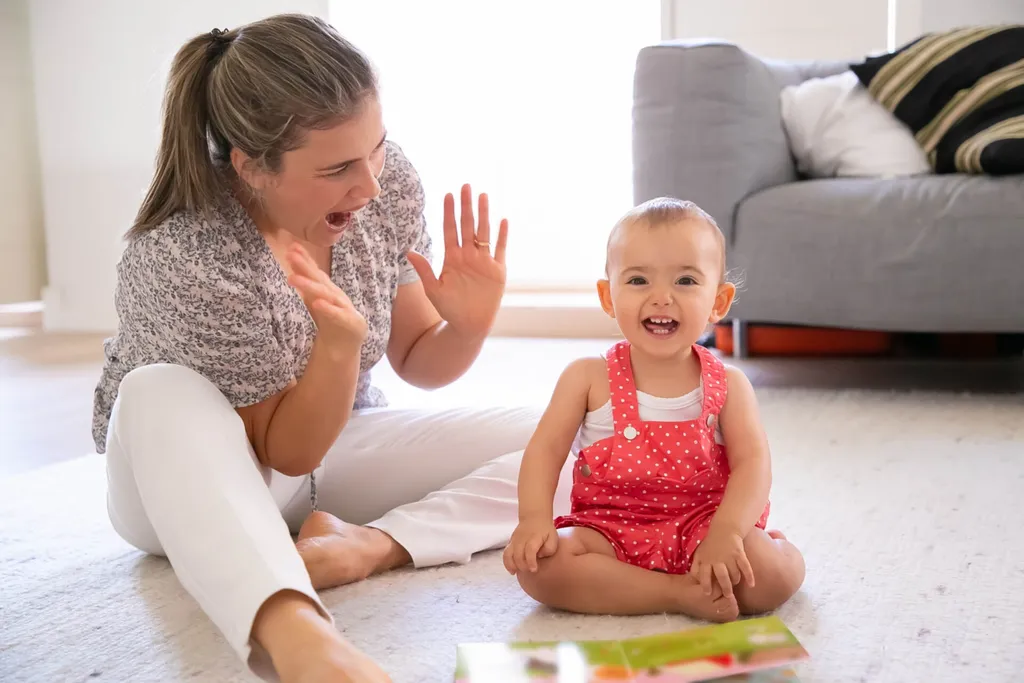
Every parent looks forward to the moment their baby starts talking. What begins as cries and coos gradually turns into words that can make you laugh, smile, and feel proud all at once.
This article will cover the essential talking milestones, from babbling to forming sentences, and list helpful tips to encourage your baby’s speech and language development. Get ready for plenty of giggles and “aww” moments as your little one starts finding their voice!
When Do Babies Start Babbling?
Before babies can say actual words, they go through an exciting stage called babbling. Babbling is when your baby starts experimenting with the sounds of speech.
It may sound like a string of “ba-ba” or “da-da,” and sometimes includes funny intonations that mimic the rhythm and tone of adult speech, even if the sounds don’t have meaning yet.
Babbling usually develops in stages. Around 4 to 6 months, babies enter marginal babbling, where they begin pairing vowel sounds with consonant-like sounds. You might hear soft coos like “baah” or “gaah,” which are their first attempts at combining sounds.
Between 6 and 10 months, babies typically reach canonical babbling, producing clearer, repeated syllables like “ba-ba” or “da-da.” These sounds start to follow a rhythmic pattern, which brings them closer to forming real words.
Between 9 and 12 months, babies enter conversational babbling. They change their tone and pitch to imitate adults. You may notice pauses and different rhythms, almost like your baby is having a mini conversation.
You can encourage this by responding with words, such as repeating their sounds or commenting on what they are doing. For example, if your baby says “ba-ba,” you might respond, “Yes, ba-ba! That’s your bottle!”
When Do Babies Start Putting Words Together?
After saying their first words, babies continue to expand their vocabulary. Between 13 and 18 months, toddlers typically know several words and begin combining simple words, like “more milk” or “all gone.” They start to understand one-step instructions such as “come here” or “sit down.”
By 18 to 24 months, the language explosion really takes off. Your child’s vocabulary grows rapidly, and they can follow two-key-word instructions, for example, “give me the spoon” or “bring the key.” They also experiment more with intonation and speech patterns, and imitate the way you talk.
This stage is an exciting step in language development because your baby is connecting words to actions, objects, and people.
When Do Babies Start Forming Sentences?
Around 2 to 3 years of age, many toddlers begin putting simple words together into phrases and sentences. This is an exciting stage because it shows they are starting to communicate more complex ideas, not just single words or two-word combinations.
During this period, children may learn new words at a remarkable pace — sometimes as many as nine to ten words a day. They begin to combine these words to express wants, needs, and observations.
At this stage, toddlers are also experimenting with grammar and sentence structure. While the sentences may not always be perfect, they are practicing how words fit together to convey meaning.
You may notice them asking questions, describing things around them, or even telling short stories about their day.
How to Encourage Your Baby to Talk
Babies are hardwired to learn language, and research shows that the foundations for communication begin right at birth (1).
As parents, you are your baby’s first and most important teacher. With simple, everyday interactions, you can help them build strong language skills while enjoying special moments together.
Here are some easy ways to encourage your baby to talk:
Talk to your baby often
Talking to your baby is one of the most important foundations for language development. There’s no limit to the time you can spend chatting with your little one.
Sharing what your baby notices, reacting to their vocalizations or gestures, and having short exchanges teaches them the structure and patterns of language.
You can do this in everyday situations, for example:
- While changing diapers at home, narrate what you are doing: “Let’s put on your clean diaper!”
- During bath time, describe the water, toys, and actions: “Splash, splash! The duck is floating!”
- While walking outside, talk about things you see: “Look at the bird! It’s flying high!”
- During mealtime, comment on textures, tastes, and colors: “Yum, your banana is soft and yellow!”
It’s also perfectly okay to have quiet moments. These pauses allow your baby to observe their surroundings and notice details that spark curiosity in the world around them.
Sing songs and nursery rhymes
Nursery rhymes play an important role in early language development because they’re written in simple, rhythmic poetry that young children can easily follow and enjoy. As you sing or chant rhymes with your child, you’re helping them learn new vocabulary and practice vocal intonation.
Research shows that rhymes are easier to remember than regular speech, which strengthens your child’s memory — and this memory boost supports learning in other areas too (2).
You can start with classic, easy-to-follow favorites such as “Twinkle, Twinkle, Little Star,” “The Itsy Bitsy Spider,” “Row, Row, Row Your Boat,” and “Old MacDonald Had a Farm.”
Feel free to sing slowly, exaggerate your expressions, and use hand gestures. Babies love watching your face, and the extra movement helps them connect sounds with meaning.
Respond to your baby’s babbling
Whenever you respond to their vocalizations, you reinforce the idea that communication matters. This back-and-forth exchange, called serve and return, helps babies learn speech.
A study found that babies whose parents responded to their babbling developed more quickly the kind of sounds that resemble real words — called advanced consonant-vowel vocalizations (like “ba,” “da,” or “ma”) (3).
Read books aloud
Reading aloud to your baby is a wonderful way to build language skills, even from a very young age. You may have noticed that around 4 months, babies start to show interest in books.
They may grab, hold, or turn the pages. Even at this early stage, the sights, sounds, and rhythms of books help them connect words with objects and actions.
Choose age-appropriate books with bright pictures, simple text, or interactive elements like textures and flaps. It’s fine to read aloud for just a few minutes at a time, but try to do it often throughout the day. And don’t worry about finishing a book. Babies are learning from the experience, not the ending.
Use names instead of pronouns
Using your baby’s name instead of pronouns like “he” or “she” helps them learn to connect words with people and objects. Babies are still figuring out that pronouns refer to someone or something, so naming them directly makes it easier for them to understand and follow along.
You can practice this in everyday routines, for example:
- Diaper changes: “David, let’s put on your clean diaper.”
- Mealtime: “David, here is your spoon. David, eat your banana.”
- Playtime: “David, roll the ball to Mommy. David, catch the toy!”
- Getting dressed: “David, put on your shoes. David, lift your arm for your shirt.”
Do the same when referring to other people, such as Daddy, grandparents, or siblings:
- “Daddy is picking up the toys.”
- “David, give the block to Mommy.”
- “Grandma is coming to visit today!”
Consistently using names helps your baby recognize who or what you’re talking about.
When Should You Worry If Your Baby Isn’t Talking?
You may want to seek advice from your pediatrician if your baby hasn’t started babbling by 6 to 9 months, or hasn’t said any words by 15 months.
Early intervention can make a significant difference. Pediatricians may recommend a hearing check, speech-language evaluation, or developmental assessment to rule out hearing or speech delays.
Remember, noticing these signs doesn’t automatically mean something is wrong, but seeking advice early helps your baby get the support they need to thrive.
The Takeaway
Watching your baby start talking is an exciting journey. The small sounds they make, babbles, and first words are all part of a natural progression toward meaningful communication.
Daily interactions through talking, reading, singing, and responding give your baby the best start in language and social development.
Reach out to your pediatrician or a speech-language professional if you have concerns. They can provide guidance and reassurance.
FAQs
Do early baby talkers have a higher IQ?
Early talking shows language progress, not intelligence. Children develop at different rates, and IQ is influenced by many factors, not just when a baby starts speaking.
Is it normal for my baby to have “silent” periods?
Yes. Many babies go through quiet periods, which are a normal part of language development. In these phases, they’re paying attention to sounds, observing how you communicate, and practicing understanding words.
Is it normal for my baby to invent their own words?
Yes. Babies often create “protowords” or made-up words or sounds that represent something they want or notice. For example, they might say “baba” for bottle, “gaga” for water, or “choo” for train. Over time, as their vocabulary grows, these protowords usually turn into real words they use consistently.


