When Do Babies Start Crawling?
Crawling usually happens around 8–12 months. You can encourage baby to crawl with a safe space, toys, and crawling practice.

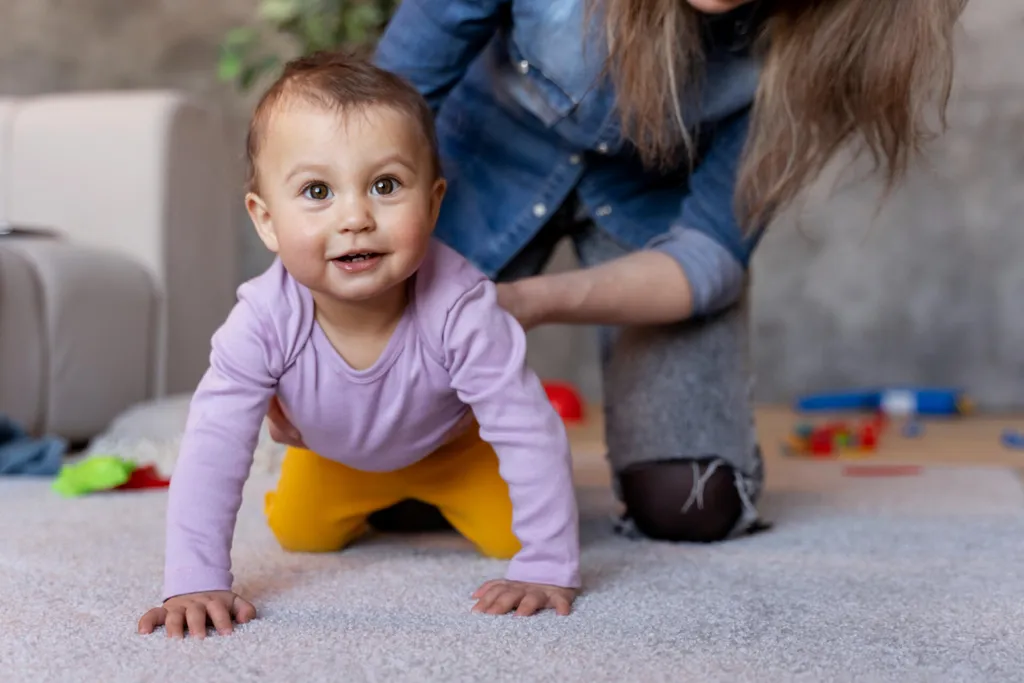
Crawling is an exciting milestone for babies and a big moment for parents, too. It’s the first time your little one starts moving around on their own and exploring the world in a whole new way.
Even though development varies from child to child, there are common cues and patterns that can guide you. This article explains when babies usually start crawling, different crawling styles, and simple strategies you can use to support your baby’s movement.
When Do Babies Begin Crawling?
Most babies begin crawling between 8–12 months, but this milestone can look a little different for every child. Some babies start earlier, some later, and some don’t crawl in the traditional hands-and-knees style at all, and that’s completely normal.
Variations in Crawling Development
It’s important to know that some babies skip crawling altogether. Instead of moving on all fours, they may prefer to roll, scoot on their bottom, or go straight to pulling themselves up on furniture.
From there, they begin cruising (walking while holding onto objects for support). These babies typically continue to develop right on track, even without a classic crawling stage.
One study found that those who crawl on hands and knees often start walking slightly earlier than bottom shufflers, but either strategy is fine (1). The key is that babies are actively exploring, building strength, and practicing coordination, which prepares them for each new milestone.
Signs Your Baby is Ready to Crawl
Before babies start crawling, they may show several signs that their muscles and coordination are ready for this big milestone. Watch out for these cues:
Rolling over consistently
Babies who can roll from tummy to back and back to tummy are developing the core strength and coordination needed for crawling. Rolling helps them learn how to shift their weight and control their movements. These are key skills for moving on all fours.
Sitting up independently
Sitting without support shows that your baby has built balance and trunk control. Both are important for supporting their body as they push and move on hands and knees.
Rocking on hands and knees
Rocking on hands and knees helps babies learn how to move their weight from one limb to another, which builds the balance and muscle strength needed for crawling. Plus, it’s such a cute and entertaining stage that parents love to watch!
Pushing up on arms and knees
Babies who can push up from their tummy onto their arms and knees are developing their upper body strength and stability. This movement is usually one of the last steps before they start moving independently on all fours.
Types of Crawling
Research by Karen E. Adolph shows that babies relearn movement at every stage. Crawling is its own skill, which is why babies try it in many different ways. In other words, crawling does not look the same for every child (2).
Here are the most common types you may see:
Classic crawl
The classic crawl is what most people picture when they think of crawling: the baby moves on hands and knees by alternating right arm with left leg and left arm with right leg.
This type of crawling is usually the most efficient way for babies to move across the floor. It lets them move freely and be able to reach for objects.
Belly crawl
In the belly crawl, also called the commando crawl, the baby moves forward while lying mostly on their stomach. They use their arms to pull themselves and their legs to push.
This type of crawling usually appears before classic crawling and is a natural first attempt at moving independently. Many babies transition from belly crawling to classic crawling as their strength and balance improve over time.
Bear crawl
The bear crawl is a hands-and-feet crawl where the baby keeps their knees off the ground, walking on their hands and the balls of their feet. This posture mimics a bear’s stance, hence the name. It requires significant upper-body and core strength.
It is a less common form of crawling and is used by babies who enjoy a challenge!
Rolling crawl
The rolling crawl involves the baby moving forward by rolling or twisting their body, often combining rolling with pushing off the floor with their arms or legs. This is less structured than other crawls. They tend to appear when babies are experimenting with movement.
Bottom scoot crawl
The bottom scoot, or “scooting,” is when a baby moves while sitting or semi-sitting, using their bottom to slide along the floor and their hands to push or pull. Babies who may not yet have the strength or balance for hands-and-knees crawling use this.
Crab crawl
The crab crawl is a backwards crawling style, where babies move on their hands and feet with their belly facing up. This uncommon crawling variation challenges coordination and balance in a different way than forward crawls.
Tips to Encourage Crawling
If you’re excited for your baby to reach this milestone, you’ll be happy to know there are easy ways to help them get there. The best part? These techniques are simple and can be worked into your daily routine.
Make a safe space for crawling
Start by babyproofing the space: remove small objects they could put in their mouth, cover outlets, secure cords, and block off access to stairs or unsafe areas. Make sure furniture is stable and won’t tip if your baby pulls up on it.
Next, add a soft surface, like a play mat or carpet, to make crawling more comfortable and inviting.
Crawl with your baby
Crawling together is a fun, playful way to encourage your baby’s movement. When you get down on the floor and crawl beside them, you’re giving them a clear example to follow. Babies learn best by watching and copying the people they love.
Think of it as a little movement break for you, too. And if your baby has an older sibling, invite them to join in! Kids love turning this into a game, and seeing the whole family crawling together can motivate your baby to try even more.
Practice sitting-to-crawling positions
Place your baby in a seated position and gently guide their hands onto the floor in front of them. Encourage them to lean forward slightly while supporting their chest or hips if needed, so they start to bear weight on their hands.
While your baby is on hands and knees, gently rock them back and forth. This helps them feel how to shift weight from hands to knees and builds the muscles needed for crawling. Even small forward movements are helpful.
Use small motivators
One of the easiest ways to encourage crawling is with your baby’s favorite toys. Place a toy just a little out of reach (off to the side or slightly ahead) so your baby has to stretch, shift, or move toward it.
The key is to make it just challenging enough to move for, but not so far that your baby gets frustrated.
Massage your baby’s legs
Massaging your baby’s legs is a wonderful way to combine quality time with movement support. Not only does it give you a chance to bond, but it can also help stimulate your baby’s joints and muscles.
For the best results, offer the massage when your baby is calm, quiet, and alert — not when they’re sleepy or fussy. Always use gentle strokes, and if you have any concerns, check with your pediatrician before starting.
When to Worry About Baby Not Crawling
In most cases, there’s no need to worry if your baby hasn’t started crawling yet. Many babies begin crawling anytime before the 12-month mark. Some babies even skip crawling entirely and move straight to pulling up and walking, which can be completely normal.
However, if you notice delays in other areas of development, like sitting, rolling, reaching, or social and communication skills, it’s a good idea to check in with your pediatrician. They can assess your baby, offer guidance, and help you feel at ease while you continue practicing the tips above to encourage movement and exploration.
The Takeaway
We hope this article has helped you understand what to expect as your baby reaches the exciting crawling milestone and given you some ideas to start practicing today. Crawling is indeed such a special time.
Treasure these moments, and don’t forget to take plenty of pictures! Every crawl, scoot, or roll is a memory you’ll want to look back on with a smile. Enjoy this playful stage because it goes by faster than you think!
FAQs
Is it normal if my baby skips crawling?
Yes, it’s completely normal for some babies to skip crawling. While crawling on hands and knees is a common developmental stage, some babies move straight from rolling or scooting on their bottom to pulling up and walking.
Skipping crawling does not necessarily indicate a developmental problem, as long as your baby continues to reach other milestones like sitting, rolling, and moving independently.
Does crawling help my baby’s development?
Yes! Crawling helps strengthen your baby’s arms, legs, and core while improving balance and coordination. It also encourages brain development, problem-solving, and spatial awareness as they explore their world.
Can babies crawl before sitting up?
It’s uncommon, but some babies may start moving before they can sit up independently. Most babies develop enough balance and strength from sitting before they crawl, but every baby grows at their own pace. As long as your baby is exploring and building strength in other ways, it’s usually not a cause for concern.
How do I know if my baby is crawling correctly?
There’s no single “correct” way to crawl because babies use different styles, like classic hands-and-knees, belly crawling, or scooting.
If you notice your baby isn’t able to bear weight on their arms or legs, seems unusually stiff or floppy, or isn’t trying to move at all, it’s a good idea to talk with your pediatrician for guidance.
What comes after crawling?
After crawling, most babies progress to pulling up on furniture and cruising — walking while holding onto objects for support. From there, they usually take their first independent steps. Each stage prepares your little one for walking and exploring even more.


