When Do Babies Recognize Their Parents?
Babies recognize your voice from their earliest days, and your face becomes familiar as their vision sharpens around 2 to 4 months. There are also simple ways you can encourage this recognition.

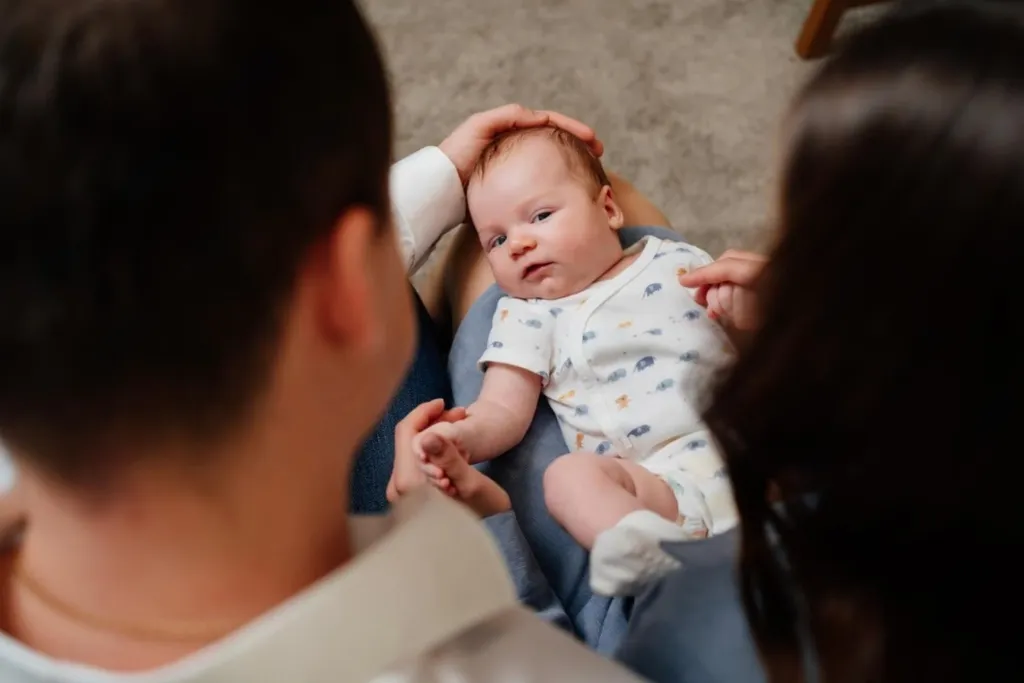
Watching your baby’s little eyes light up when they see you is one of the best moments of parenthood. If you’re wondering how and when babies begin to recognize their parents, it mostly comes down to time, exposure, and the bond you build together.
Here’s what science and everyday experience tell us about how babies start to recognize the people who care for them, and simple ways you can support that process.
How Babies Recognize Their Parents
Babies begin to recognize their parents through a combination of sight, sound, and smell. From the very first days of life, they can pick out their mother’s voice from others (1). Their sense of smell also plays a surprising role — infants can detect the unique scent of their parents, which helps them feel connected.
Even before their vision fully develops, babies use these cues to start forming an early understanding of who their caregivers are.
Studies show that babies get much better at recognizing and processing faces as they grow during their first year. And for younger babies, having their mother’s scent nearby makes it even easier for them to notice and remember faces (2).
Recognition is also deeply tied to bonding and daily interactions. Feeding, talking, singing, holding, and skin-to-skin contact all help babies connect the different sensory cues that belong to you. Each repeated interaction reinforces the familiarity of your voice, face, and scent, which helps your baby build a clear picture of who you are.
Early attachment lays the foundation for recognition. The more time you spend together the stronger your baby’s ability to recognize you becomes.
When Do Babies Recognize Their Parents?
Babies begin recognizing their parents at different times depending on the sense they’re using. Voice recognition develops earlier, while facial recognition takes a bit more time as their vision improves.
Babies start learning your voice long before they’re born. During pregnancy, they hear the sounds of your speech through the womb, and that early exposure helps them recognize your voice once they arrive (3). In fact, studies show that newborns already prefer their mother’s voice over others, which is why they often calm down or turn their head when they hear it (4).
Babies also learn to recognize their father’s or non-birthing parent’s voice soon after birth. With regular talking, soothing, and interaction, they begin to link those familiar sounds to comfort and safety.
Here are signs your baby recognizes your voice:
- They turn their head or eyes toward you when you speak
- They become calmer when they hear you
- Their facial expression changes when you start talking
- They pause or become more alert as if they’re listening
Facial recognition takes a little longer to develop because babies are born with blurry vision. As their eyesight sharpens over the first few months, they get better at noticing familiar faces, especially the ones they see the most.
Many babies begin consistently recognizing their parents’ faces somewhere between 2 to 4 months of age. During this time, they start focusing more on facial features and remembering the details that make your face different from others.
Here are signs your baby recognizes your face:
- They smile when they see you
- They look at you longer than they look at unfamiliar people
- They follow your face with their eyes
- They seem more relaxed or excited when you enter the room
As your baby’s senses continue to develop, there are simple you can do to help strengthen that recognition.
How to Help Your Baby Recognize You
You don’t need special routines or complicated activities to help your baby learn who you are. The daily moments you share make the biggest difference. Follow these simple, nurturing ways to support your baby’s growing recognition:
Make eye contact
Face-to-face time helps your baby learn the shape of your features and the way your expressions change. Even a few minutes of looking at each other during feeding, diaper changes, or cuddles helps strengthen that visual connection.
I love doing this during feeding, holding my baby close so we can gaze at each other. I usually let him lie in my arms, angled just right so our eyes meet.
Talk, sing, and read
Your voice is one of your baby’s most important cues. Talk to them while you move around the room, sing during playtime, or read a short book while they’re resting on your lap. The more they hear you throughout the day, the faster your voice becomes a comforting, familiar anchor.
Use facial expressions
Babies are naturally drawn to expressions, so showing joy, surprise, or curiosity helps them pay attention and learn your features. For example, a soft smile while feeding, a playful eyebrow raise during peek-a-boo, or a surprised “oh!” when they explore a toy gives your baby clear visual cues.
Skin-to-skin contact
The warmth of your skin, your scent, and the rhythm of your heartbeat all create sensory memories that reinforce recognition. Holding your baby against your chest during moments or after a bath can deepen their sense of familiarity and trust.
Research shows skin-to-skin contact with either parent can calm babies, stabilize their heart rate, and regulate breathing, especially important for preemies. It also helps parents feel more confident and connected, which strengthens the bond that supports recognition (5).
Interact and play
Interaction and play are key ways babies learn to recognize faces and expressions. Simple games, gentle talking, and using a mirror help babies connect visual cues with emotions.
Mirrors are particularly effective because babies often spend time looking at their own reflection and the faces of those around them, which supports facial recognition.
My son and I include mirror play in our afternoon routine daily, and I’ve noticed that whenever we look in the mirror, he spends a few minutes staring at my face as if he is studying it, taking in my expressions and features.
What If My Baby Doesn’t Seem to Recognize Me Yet?
It’s natural to feel concerned if your baby doesn’t always respond to your voice or face the way you might expect. Sometimes, this lack of recognition can be perfectly normal, but in other cases, it may signal that something in your baby’s development isn’t progressing as smoothly. The good news is that early support can help.
There are some signs that might suggest a developmental delay. For example, a limited response to your voice, such as rarely turning toward you when you speak or seeming indifferent to familiar sounds, could indicate an issue.
Hearing difficulties, in particular, can make it harder for babies to pick up on voices and other auditory cues.
Another sign to watch for is very little facial engagement. If your baby doesn’t smile back, rarely makes eye contact, or seems uninterested in looking at you or other familiar faces, this could point to a social or visual development delay.
If you notice these or other concerning behaviors, it’s important to bring your observations to your pediatrician or child health provider. Requesting a developmental screening or evaluation can help identify potential issues early.
The Takeaway
Your care and consistent presence all help your baby learn who you are and strengthen the bond you share. Remember, daily eye contact, singing, playful expressions, and cuddles matter more than you might realize.
Watching your baby grow and learn who you are is a special part of early parenthood. Babies reach these milestones at their own pace, but if you ever have concerns about your child’s development, don’t hesitate to reach out to your pediatrician.
FAQs
When do babies recognize their parents’ voices?
Babies begin recognizing their mother’s voice even before birth, thanks to hearing sounds in the womb. After birth, most infants can recognize their mother’s voice within the first few days, and with consistent interaction, they also learn to recognize their father’s or other caregiver’s voices.
When do babies recognize their parents’ faces?
Facial recognition usually develops around 2 to 4 months of age, as babies’ vision improves. During this time, they start focusing on familiar faces and noticing the unique features that make their parents’ faces special.
How long is a baby's memory?
Even young infants can remember familiar people for days or weeks. Memory improves with age and repeated exposure, so the more time you spend interacting, the stronger your baby’s recognition and recall become.
When do babies recognize themselves?
Self-recognition usually appears later, around 15 to 24 months, when toddlers begin to realize that the reflection in the mirror or photos represents them.
Can babies recognize other family members, too?
Yes! Babies gradually learn to recognize other close family members, such as siblings, grandparents, or primary caregivers, especially if they spend regular, quality time together.


